
None of this made sense.
That evening, Veronica brought it up to James while clearing the dinner table. “She’s never been in school,” she said slowly, “so how is she so advanced?”
James only shrugged, setting down his fork with a casual grin. “Maybe she’s just gifted. Some kids pick things up faster than others.”
His explanation was comforting, and Veronica wanted to believe it.
She chalked up her anxiety to stress. Maybe she was simply looking for cracks where there weren’t any.
Esther was home now. Wasn’t that all that mattered?
For a while, Veronica let herself enjoy the rhythm of family life again.
But then the odd moments began.
Subtle, yet impossible to ignore.
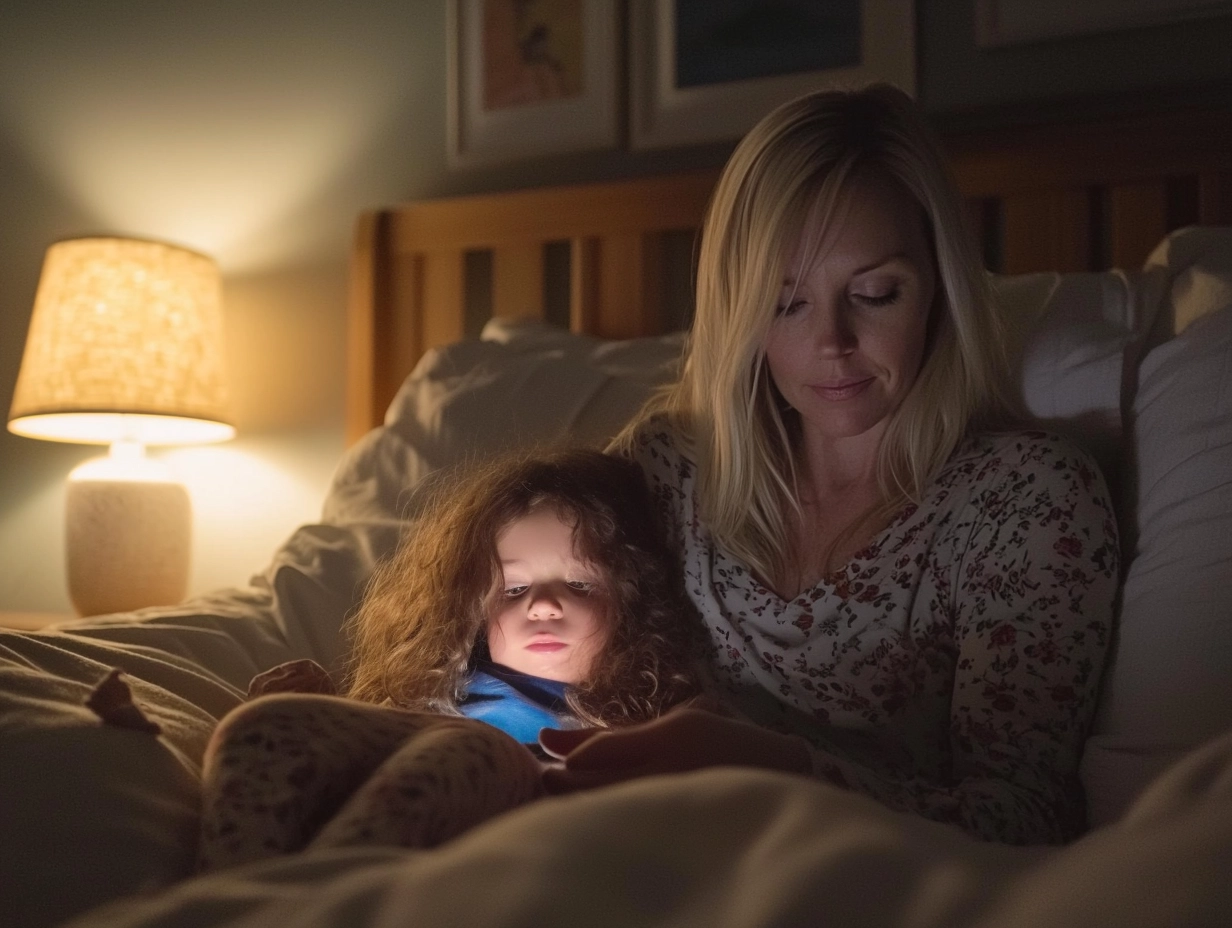
Esther could follow adult conversations effortlessly, responding with eerie clarity. She sometimes used phrases too complex, too mature for a first-grader. Her expressions held an unsettling depth, her eyes scanning people like she understood more than she should.
Veronica told herself it was just imagination—parental overthinking.
But the feeling lingered.
And then, one evening, while passing by the playroom, Veronica overheard a conversation that stopped her cold.
“Why don’t you like pretending?” Arthur asked his sister, puzzled.
Esther’s reply came calmly, without hesitation. “Pretending is for children. I’m not a child.”
Veronica froze.
She stood motionless in the hallway, those words echoing in her head.
Not a child?